Most families spend hours scrolling through glossy resort photos and still end up booking a stay that disappoints their kids. The problem usually isn’t taste or budget — it’s that they compare family resorts using the wrong things first: pretty pools, drone shots of the beach and staged breakfast scenes that tell you almost nothing about how a week there will actually feel with children in tow.
This guide flips the order. You’ll start by narrowing options based on your children’s ages and your real non-negotiables, then compare room setups and sleeping space, location and transfer times, and the true total cost rather than the nightly rate. From there, you’ll learn to read reviews with a family lens, recognize when a villa or lodge might serve your crew better than a traditional resort, and pull everything into a shortlist you can book with confidence. Fewer wrong turns, less scrolling, and a stay your kids actually enjoy.
How to Compare Family Resorts Without Getting Overwhelmed
The fastest way to get overwhelmed is to look at twenty resorts at once and treat them all as equals. Narrow the field before you open a single website, and the comparison becomes manageable.
Start with your children’s ages
Kids’ clubs at most family resorts typically serve ages 4-12, which means the club schedule — often the main reason families pick a resort in the first place — may not apply to your crew. If you have a toddler, you need proof of age-appropriate options such as supervised toddler sessions, babysitting services or shallow play pools, not just a colorful club brochure. If you have teenagers, ask specifically what exists for them, since programming for teens is often separate or limited, and a resort that looks perfect for a seven-year-old can leave a fourteen-year-old bored by day two.
Rank your non-negotiables before browsing
Before you compare anything, write down your top three must-haves. These might be a shaded pool for fair-skinned kids, flexible meal times for a napping toddler, or adjoining rooms so everyone actually sleeps. Rank them in order, because when two resorts tie on price and location, your first non-negotiable breaks the tie. Any resort that fails one of your top three gets removed from the list immediately, no matter how good the photos look.
Then make your first pass photo-free. Ignore the galleries entirely and compare only the fact sheets: club age ranges, room capacities, dining hours and transfer details. Marketing images are chosen to flatter, and they routinely hide what a resort actually offers families. Facts first, pictures later — only for the two or three finalists.
Compare Room Setups and Sleeping Space
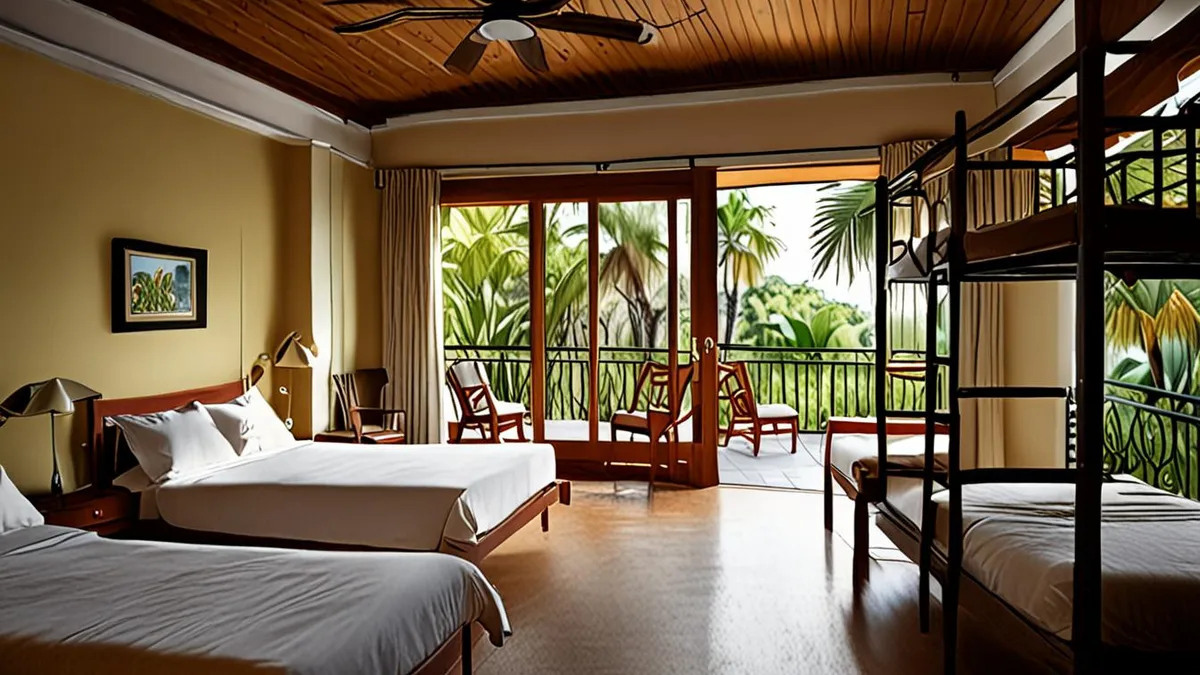
Room size is where family bookings most often go wrong. The standard family room at most resorts sleeps 4, so if you’re a family of 5 or more, your shortlist should only include resorts offering connecting rooms or a true suite. Anything else forces an awkward compromise: a child on a floor mattress, a baby in the bathroom, or parents sharing a bed with two kids and regretting it by night three.
Even when a listing says “sleeps 5,” don’t take the label at face value. Ask for the exact bed configuration in writing. A king bed plus a sofa bed for two children is a very different stay than a king plus two proper singles, and a rollaway squeezed between existing furniture can make the room feel half its advertised size. Sofa beds and rollaways also change where luggage goes, where the crib fits and whether anyone can walk to the bathroom in the dark without stubbing a toe.
Before you commit, confirm these details in writing:
- Cot or crib availability: ask whether one is provided free, whether it needs reserving in advance, and whether it fits in the room alongside the other beds rather than blocking a door or wardrobe.
- Number of bathrooms: one bathroom for a family of five means morning queues; two bathrooms, or at least a separate toilet, removes the single biggest daily friction point.
- Balcony and window safety: check railing heights, the gaps between balusters, and whether windows lock, especially on upper floors where a curious toddler is a genuine risk.
Get each of these answers confirmed by the resort itself, not inferred from photos or third-party descriptions. A two-minute email now prevents the most common family check-in disappointment there is.
Compare Location and Transfer Times
How far is too far after a flight?
Family-oriented resorts commonly sit 30-90 minutes from the nearest airport, and that range matters more with kids than it does as a couple. Thirty minutes after a four-hour flight is manageable with a toddler; ninety minutes of winding mountain road with a jet-lagged six-year-old is a different experience entirely. Before shortlisting, decide honestly how long your children can handle right off a plane, then filter resorts by that limit rather than falling for a beach photo taken two hours from the nearest runway.
Once distance is settled, look at how the transfer is paid for. Some resorts include an airport shuttle; others charge separately, and for a family of four or five that fee can meaningfully change your total spend. Ask whether transfers are private or shared, since a shared minibus making five hotel stops can stretch a one-hour drive into something much longer with tired kids on board.
What’s walkable outside the gate?
Finally, check what surrounds the resort. Look for beaches, small shops, pharmacies or medical care within walking distance, in case you want breaks from the resort bubble without arranging a taxi every time. A resort that’s completely isolated can feel like luxury on day one and like a beautifully decorated trap by day four. If your family likes wandering out for gelato, a local meal or a stretch of sand that isn’t part of the resort’s own beach, that walkability deserves a spot on your comparison sheet. For a sense of what lies beyond the typical tourist strip, this account of traveling past the tourist beaches captures why that outside-the-gate access can shape a whole trip. Map the surroundings before you book, not after you arrive.
Break Down the Real Cost and Booking Window
A nightly rate tells you almost nothing on its own. The price that matters is what your whole family will spend from the moment you land to the moment you fly home, and getting to that number takes a few deliberate steps. The good news is that the math is simple once you know which numbers to gather, and it usually takes less time than scrolling through another round of resort photo galleries.
- Add up the full stay, not the nightly rate. Take the rate for your dates and add airport transfers, meals, drinks, and any kids’ club fees on top. Two resorts with similar nightly prices can end up hundreds of dollars apart once everything is included. Ask the resort directly for a sample total bill for a family of your size, since front desk teams can often email one within a day.
- Test both pricing models with your own numbers. All-inclusive packages typically cost 30-50% more than room-only rates. That premium can be worth it if your family eats big breakfasts, orders poolside drinks all day, and never leaves the property. If your kids are picky eaters or you plan to eat out often, room-only plus a kitchen may come out cheaper. Estimate what your family actually spends on food during a normal week of vacation and run the math.
- Book 3-6 months ahead for peak dates. For travel in mid-June to late August or mid-December to early January, rates typically run 40-60% above low season, and the family-friendly room types sell out first. Booking a few months ahead gives you the best chance at connecting rooms and suites before they disappear.
- Price the same resort in shoulder season. If your dates are flexible, check the identical room a few weeks before or after peak season. The difference shows you exactly how much your calendar flexibility is worth, and it is sometimes enough to fund an extra night or a room upgrade. Even shifting your trip by a week or two can move you into a quieter, cheaper stretch of the calendar.
Doing this once per resort takes about twenty minutes, and it turns a vague comparison into a real decision. Families who compare totals rather than headline rates rarely get surprised at checkout. Keep your notes in one simple spreadsheet with a column for the true total, and the best-value option for your family will usually become obvious within a couple of evenings of research.
Read Reviews With a Family Lens
Reviews can make or break a family booking, but only if you read them the right way. A five-star average means little if the one-star reviews are all from parents whose toddlers screamed all night in paper-thin rooms.
Start by filtering reviews to those tagged “family” or mentioning children. Then look at the volume: reviews are most reliable when a resort has 100+ recent reviews, because at that scale patterns are harder to fake. A resort with a handful of glowing reviews could be genuinely great or carefully curated, and you have no way to tell.
Look for patterns, not horror stories
One family’s bad week does not tell you much. Three reviews in a month complaining about the same thing tells you a lot. Hunt for repeated complaints: thin walls between rooms, crowded pools with no loungers by mid-morning, a kids’ club that was closed for the entire stay, or staff who seemed overwhelmed during school holidays. These recurring themes reveal how a resort actually operates under family-season pressure.
Pay close attention to review dates as well. A resort that renovated last year may look nothing like the reviews from three years ago, in either direction. Older reviews describing tired rooms may no longer apply, while a fresh renovation sometimes means construction noise that has not shown up in the average yet. Sort by most recent first and weight the last year of feedback more heavily than the rest. Ten minutes of this kind of reading will tell you more than any photo gallery.
Know When to Look Beyond a Traditional Resort
Sometimes the honest answer is that a traditional family resort is not the right fit. Resorts are largely built around kids’ clubs that usually serve ages 4-12, with separate or limited programming for teens. If your children fall outside that sweet spot, you may be paying a premium for facilities you cannot use.
When the ages do not fit
With children under 4, you will be managing naps, cribs, and strollers on your own schedule anyway, so a villa or aparthotel with a kitchen and separate sleeping space often works better than a resort whose club does not yet accept your toddler. With teenagers, look honestly at whether teen programming exists and appeals to them, or whether a rental villa with space for their friends, a game console, and a private pool would get a better reaction.
Match the stay to the trip’s purpose
Think about what you actually want from the week. If the goal is unplugged time together rather than an entertainment schedule, smaller nature-based stays often beat large resort complexes: a cabin near a national park or a family-run lodge with trails and campfires gives you connection instead of a clipboard of scheduled activities. On the other hand, if this trip is a recovery break where you want meals handled and kids happily occupied by the pool, a pool-heavy resort is exactly the right tool. A quiet lodge suits an outdoors-focused holiday; a resort suits a do-nothing one. Being clear about the trip’s purpose before you search saves you from booking beautiful accommodations that quietly fight the vacation you wanted.
Putting It All Together Before You Book
Many families spend hours browsing polished resort galleries and still book a stay that disappoints their kids, because they compare the wrong things first. The fix is simple: compare facts before images. You ranked your must-haves by your children’s ages, checked room capacity for families of 5 or more, sized up transfer times of 30-90 minutes and added up the true total cost of a stay.
You also weighed all-inclusive pricing against room-only rates, looked for patterns across 100+ recent reviews and considered whether a villa or lodge might beat a traditional resort for your trip. With a shortlist built on facts instead of photos, you can book 3-6 months ahead with confidence. If this helped you plan, leave a comment or share the article with another traveling family.