A glamping trip promises the best of both worlds: a real bed, a proper roof overhead and nature right outside the door. But comfort in the wild depends on preparation. Forgetting one key item — a warm layer, a lantern, a way to charge your phone — can turn a luxury stay into a frustrating weekend of improvising.
This practical checklist walks you through everything you need, step by step. We start with how to match your packing to the site and season, then cover clothing and footwear, sleep comfort inside the tent, a kitchen and food list, toiletries and off-grid power, and finally a few extras that make the whole experience feel genuinely luxurious. A recap at the end pulls it all together so you can run through the list the night before you leave.
Before You Pack: Match Your Glamping Trip to the Site and Season
The biggest packing mistake is assuming every glamping site is the same. Some tents come fully furnished with bedding, towels, cooking equipment, lighting and even heating; others are closer to a canvas room with little more than an air mattress. Message the host before you pack and get a clear list of what is provided. Many glamping sites provide bedding but not towels, for example, so confirm before you stuff a bulky towel into your bag.
Timing matters too. If you want to travel during the June-August peak season, book 2-3 months ahead. The most popular tent types — the larger ones with better views and real beds — are usually the first to go, and late bookers often end up with whatever is left.
Know what the site has before you load the car
Ask specifically about power, running water and Wi-Fi. A site with electricity means you can leave the big power banks at home; an off-grid tent means you carry everything you need for lighting and charging. Water access decides whether you pack a full wash kit or just the basics.
Finally, ask about terrain and access. If your tent sits at the end of a grassy or gravel path, leave the hard suitcase in the closet. A 40-60L duffel or soft bag suits most glamping trips better than a hard suitcase, because you can sling it over a shoulder and haul it across uneven ground without fighting wheels.
Clothing and Footwear for a Glamping Trip
Weather at a glamping site rarely sits still. A single weekend can easily swing across a 5-25°C range between a warm afternoon and a chilly night, so the smart approach is layers rather than one heavy jacket. Start with t-shirts, add a fleece mid-layer, and top it off with a windproof outer jacket you can pull on the moment the wind picks up.
Mountain sites deserve special respect. After sunset, temperatures there can drop 10-15°C below daytime highs, which is why warm sleepwear and a beanie belong in your bag even in summer. If you have ever shivered through a night in the hills, you know exactly why — this piece on a cool mountain night in Da Lat captures that sudden evening chill perfectly.
Footwear is the other half of the equation. Bring two options rather than trying to make one pair do everything, and add a compact rain shell even if the forecast looks dry — mountain weather changes fast, and a shell weighs almost nothing.
- Sturdy waterproof shoes: pick a pair with decent grip for muddy or rocky trails, and break them in before the trip so blisters do not ruin day one.
- Slip-on sandals: ideal for padding around the tent, trips to the bathroom block and giving your feet air after a long hike.
- Merino or synthetic socks: pack at least one spare pair per day; damp socks are the fastest route to cold, miserable feet.
- A beanie and light gloves: small items that weigh almost nothing but make a 10°C evening feel far more comfortable.
Sleep and Comfort Essentials Inside the Tent
Even the most luxurious tent can feel uncomfortable if you sleep badly. If the host has not confirmed bedding, bring your own pillow or at least a pillowcase, and consider a lightweight sleep liner — it keeps shared or unfamiliar bedding feeling fresh and adds a surprising amount of warmth on cool nights.
Lighting is the next thing to sort out. Many glamping tents have no interior lighting at all, or just a single dim bulb, so a rechargeable or battery lantern is essential for reading, playing cards or simply finding your shoes after dark. Anyone who has spent a night at elevation knows how sharp the cold gets — nights in the mountains can fall 10-15°C below daytime highs, as described in this account of a cool night above Java — and a warm sleep setup matters as much as the view.
Then there is noise and light. Campsites wake up early, and nature is rarely quiet, so a few small items go a long way toward an undisturbed night.
- Earplugs: foam pairs weigh grams and block out early-rising neighbors, rustling wildlife and wind flapping against the canvas.
- An eye mask: tents brighten quickly at dawn, and a mask lets you sleep past sunrise if you want to.
- A hot water bottle: fill it at the kitchen block before bed; it doubles as warmth on cold nights and costs nothing to run.
- A small dry bag for sleep gear: keeps spare socks and sleepwear dry and doubles as an organizer inside a crowded tent.
Kitchen and Food Packing List
The fastest way to overpack for a glamping trip is to bring a full camp kitchen when the site already has one. Before you start planning meals, message the host and confirm exactly what is available: a stove, a grill, a fire pit, or some combination of the three. Then pack only the gap. If there is a gas stove but no fuel, bring a small canister. If meals happen over charcoal, pack a small bag of briquettes and a lighter rather than assuming the site sells them on-site.
For a stay of two or three nights, a soft cooler bag with a few ice packs handles fresh food better than a rigid cooler, and it packs flat on the way home. Plan one-pot meals such as pasta, stir-fries or chili, since they need a single pan, minimal prep space and almost no washing up. Pre-chop vegetables at home if you can; counter space in a tent is limited at best.
Your basic kit does not need to be large, but each item earns its place:
- One good knife with a blade guard or sheath, so it survives the trip in your bag and stays safe to unpack.
- A small cutting board, ideally a flexible one that rolls up, because tent tables are often tiny or uneven.
- A single non-stick pan with a removable or folding handle, which covers frying, boiling and simmering for one-pot meals.
- Sporks instead of cutlery, one per person, which halve the number of utensils you need to wash.
- Biodegradable soap and a sponge, so you can wash up at a water point without leaving harsh suds in the ground.
- Sealed containers or zip bags for every food item, including snacks, since open packets and loose crumbs attract rodents, insects and bolder wildlife after dark.
That last point matters more than it sounds. Even at well-run sites, animals learn quickly where food is stored. Never keep snacks in your tent overnight; use a lidded box in your vehicle or a designated storage area if the host provides one. A tidy, sealed kitchen setup keeps your meals safe and the site’s wildlife wild.
Toiletries, Health and Off-Grid Power
Glamping bathrooms range from spotless en-suite facilities to a shared wash block down the path, so your toiletry kit should work in either case. Stick to travel sizes: a small bottle of biodegradable soap, a travel toothpaste, sunscreen and insect repellent. Biodegradable products matter because many sites use septic systems or discharge gray water close to nature. If towels are not confirmed in your booking, add a quick-dry travel towel, since many sites provide bedding but not towels.
A compact first-aid kit takes up no more space than a paperback and solves most minor problems on the spot. Build it around the basics: plasters, antiseptic wipes, blister pads, painkillers and any personal medication you take daily. Blister pads deserve special mention if your trip involves trails; a hot spot caught early is the difference between a comfortable walk and a miserable one. Check expiry dates before every trip and restock anything you used last time.
Power is the other thing people underestimate. For a two or three night off-grid stay, a portable power bank of 10,000-20,000 mAh per person covers phone charging with room to spare, and a single set of charging cables for everyone in the tent avoids the hunt for a lost cord. Keep the power bank topped up before you leave and pack it in your day bag, not your checked luggage, if you are flying.
After dark, campsites are genuinely dark, which is part of the charm until you need the bathroom at midnight. A headlamp with spare batteries beats a phone flashlight every time, because it keeps both hands free for laces, gates and doors. Clip it by the tent door during the day so it is exactly where you expect it at night.
- Lip balm with SPF, since lips burn quickly at altitude and on breezy days when you do not feel the sun.
- Hand sanitizer for use before meals when the wash block is a walk away.
- Twist ties or a short cable organizer, so charging cables do not tangle into a knot in the bottom of your bag.
- A small zip pouch for medication, kept in your day bag rather than the tent, so it stays with you on hikes and during travel.
Extras That Make a Glamping Trip Feel Luxurious
Glamping already gives you a real bed and a roof, so the extras that push the experience from comfortable to memorable are usually small and cheap. Start with seating. Some sites provide a bench or basic chairs outside each tent, while others offer nothing more than the bed inside. If your host confirms seating is limited, add two folding camp chairs and a compact table; an evening drink tastes far better when you are not balancing plates on your knees.
Evenings by the fire
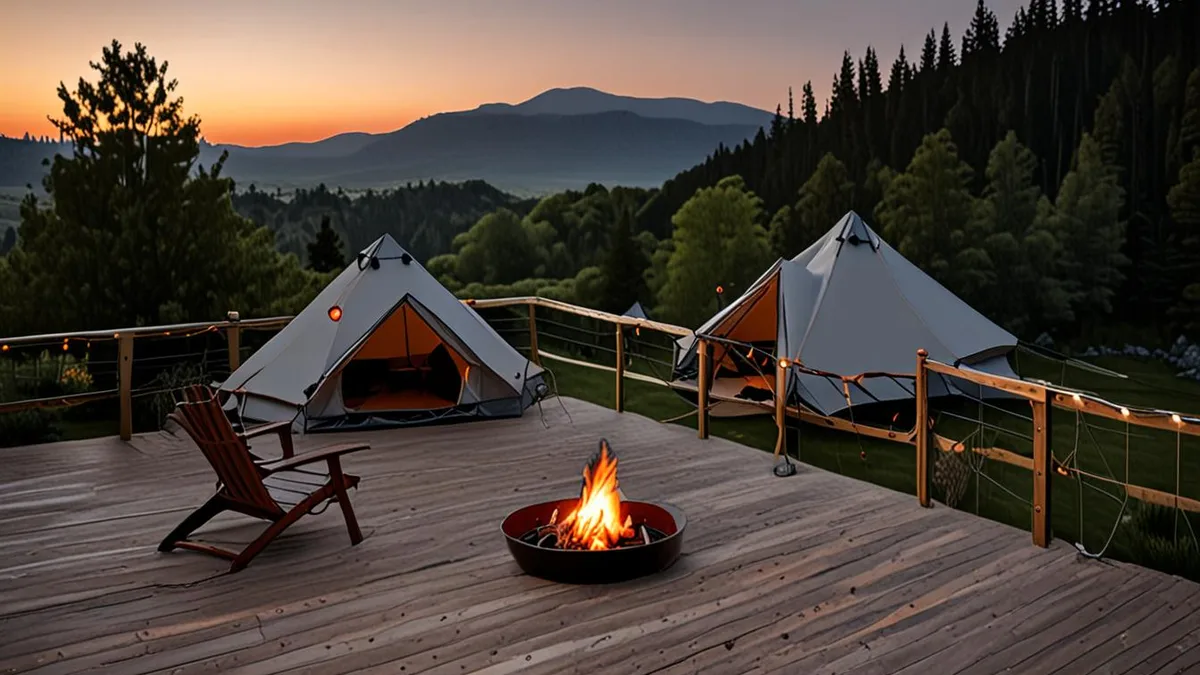
Slow evenings are the whole point of a glamping trip, so pack for them deliberately. A soft blanket draped over your chair turns a cool night by the fire into the best part of the day, especially when temperatures drop after sunset. Bring a book you have been saving, or a small portable speaker kept at considerate volume, and you have everything a good campfire evening needs. Cards or a compact travel game work well for groups and need no battery at all.
Small comforts that earn their space
A few items protect both your gear and your mornings. A dry bag or a simple waterproof pouch keeps phones, car keys and documents safe during a sudden downpour, and it doubles as a place to stash wet swimwear. A thermos filled before bed means morning coffee is ready the moment you wake up, no walk to a shared kitchen block required, and it stays warm through a slow breakfast in your chair.
None of these extras is essential, and that is exactly the point. They take up little room in a soft duffel, they weigh almost nothing, and together they are what you will actually remember from the trip: warm feet, dry electronics, hot coffee and a comfortable seat under the stars.
Final Glamping Trip Checklist Recap
Glamping promises comfort in nature, but forgetting one key item can leave you shivering in a tent you paid a premium for. The fix is simple: confirm what the site provides, then fill the gaps. Layers that handle a 5-25°C range, sleep comfort items, kitchen basics, a health kit and a few luxury extras cover every scenario a typical trip throws at you.
Remember the two habits that make everything easier. Book 2-3 months ahead for peak season so you get the tent type you actually want, and pack in a soft duffel that is easy to carry across grass and gravel. Finally, run through this checklist the night before departure so nothing is left behind. If this helped you plan your trip, leave a comment or share the article with a fellow traveler.