Many travelers picture Southeast Asia as a wall of heat and humidity year-round, so they never consider sleeping in a tent there. That assumption makes them miss one of the region’s best travel experiences: glamping in Southeast Asia’s highlands, where elevation turns sticky nights into crisp ones and campfires feel genuinely welcome. The catch is that timing matters more here than almost anywhere else, because each highland region has its own dry window and rainy stretch.
This guide breaks down how elevation changes the glamping calendar, why November to February is peak season across the mainland highlands, and how to time a trip to Da Lat and Vietnam’s Central Highlands. It also explains why Java and Indonesia’s island highlands work better from May to September, what to expect if you travel during the June to October rains, and how to plan, pack and book so you get the right tent, dome or cabin at the right price.
Why Highlands Change the Glamping Calendar
Southeast Asia’s cool highlands generally sit between roughly 1,000 and 1,800 meters above sea level, and that elevation is what rewrites the usual tropical travel calendar. As a rule of thumb, highland nights run 5-10°C cooler than in the lowlands just a couple of hours away. A region that feels like a sauna at sea level can be genuinely chilly after dark up in the hills.
Comfort is the real difference
That temperature drop changes what glamping feels like. In a beachside tent, evenings are often a sweaty affair with the canvas flaps open and a fan struggling away. In the highlands, cool evenings make tent and dome stays comfortable rather than clammy, and many sites build the experience around a fire pit or a hot drink on the deck. You sleep under blankets instead of lying on top of the sheets.
Mist is part of the package
Morning fog and drifting mist are a signature of these landscapes, and they photograph beautifully rolling over tea plantations and pine ridges. They also affect your planning in practical ways. Visibility can be poor until mid-morning, which matters if you have an early transfer or a sunrise viewpoint on your itinerary. Pack a light waterproof layer, quick-drying clothes and something warm for the evenings, because the gap between a warm afternoon and a cold, damp night is often bigger than first-time visitors expect.
November to February: Peak Season for Glamping in Southeast Asia’s Highlands
From November to February, mainland Southeast Asia’s highlands hit their stride. The band of cool country that stretches from northern Thailand down through Laos and into Vietnam’s Central Highlands is at its coolest and driest in these months, which is exactly what you want when your hotel for the night is made of canvas.
What the weather feels like
In the hills around Chiang Rai and Chiang Mai, expect days of roughly 15-25°C with sunshine and low humidity. Nights turn crisp enough that a campfire becomes the center of the evening rather than a photo prop, and many glamping sites lean into it with fire pits, BBQ dinners and blankets laid out on the deck. If you want a sense of what the northern countryside feels like in this season, our rural journey around Chiang Rai captures the rhythm of the area outside the city.
Booking and price reality
The same conditions that make these months glorious also make them the busiest. Popular highland sites fill fastest in this window, especially around holidays and long weekends, and prices sit at the top of the typical $50-200 per night range for glamping stays. If you have your heart set on a specific dome or safari tent in December or January, treat it like any other high-demand booking and lock it in early rather than hoping for a last-minute spot.
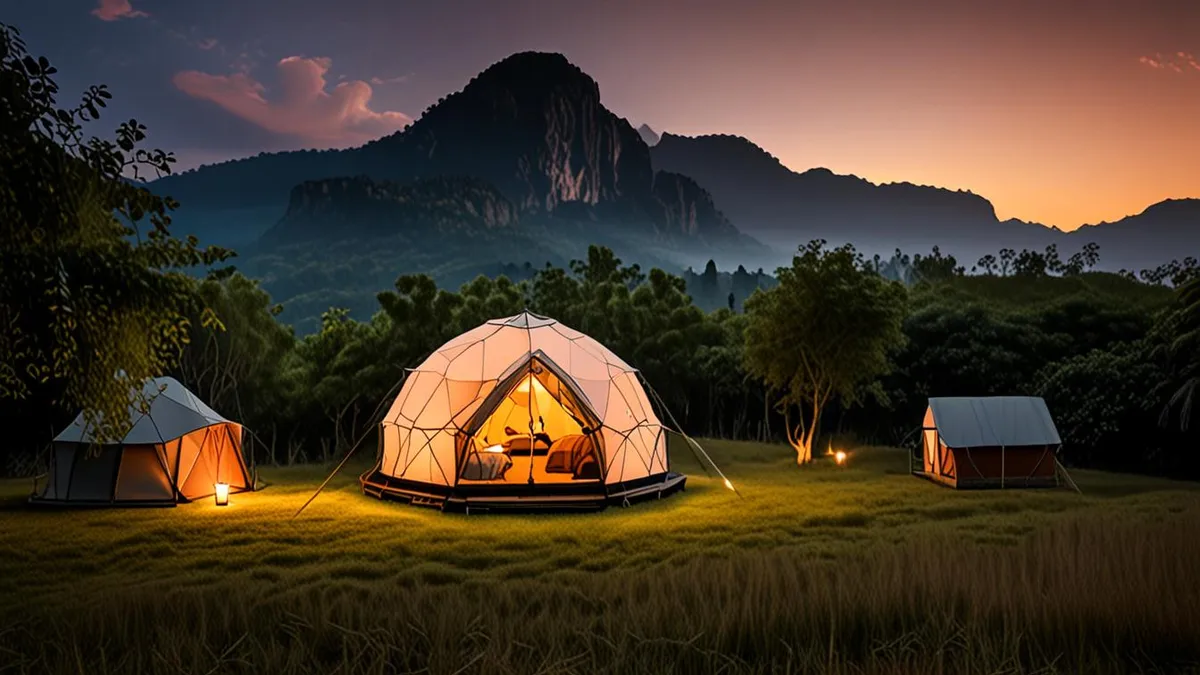
Da Lat and Vietnam’s Central Highlands: Timing the Dry Months
Da Lat runs on its own weather rhythm. The city’s dry season lasts from November to April, making it the most reliable stretch for sleeping outdoors, and the coldest nights land in December and January, when temperatures dip to around 10-15°C. That is proper blanket-and-hot-chocolate weather, and it is exactly why Da Lat has become a favorite for travelers who want a taste of cool without leaving the tropics.
If cold nights aren’t your thing
Not everyone enjoys shivering in a tent. If you are sensitive to cold, March and April are the sweet spot: still within the dry season, so rainfall stays low, but with nights that are slightly warmer. You keep the clear skies and pleasant days while giving up only a little of the chill, which many visitors consider a fair trade. For a closer look at what a night up here actually feels like, read about our cool mountain night in Da Lat.
Why Da Lat works so well for glamping
The setting does a lot of the work. Rolling pine forests, freshwater lakes and cool mountain air surround the city, giving operators a landscape that needs little dressing up. As a result, Da Lat has one of the region’s most developed glamping scenes, with a wider spread of tent, dome and cabin styles than most highland destinations can offer. Whether you want a basic bell tent by a lake or a more polished dome with proper furniture, you will generally find more options here than elsewhere in Vietnam’s highlands.
Java and Island Highlands: Why May to September Works Better
While mainland Southeast Asia cools down in winter, Java follows its own rhythm. The east monsoon makes May to September the driest stretch for the island’s mountain areas, which means clearer skies, passable roads and far fewer washed-out afternoons at your tent.
The highlands around Bandung and across East Java sit in a ring of volcanoes, and that elevation cools things down noticeably at night, even in the middle of dry season. Days can feel pleasantly warm, but once the sun drops behind the ridges you will want a fleece or a fire pit. For a sense of what those evenings are like, this cool night above Java captures the atmosphere well.
Shoulder Months Worth Considering
If you want quieter sites and lower rates, look at May and October. These shoulder months sit just outside the driest stretch, so you may catch a shower or two, but the weather is typically still manageable. Rainfall is usually shorter and lighter than in the heart of the wet season, and camps often drop their prices to fill tents. Just confirm your chosen site’s road access before committing to a shoulder-month stay, since some mountain routes deteriorate quickly when rain arrives.
What to Expect During the June to October Rainy Season
The rainy season, which runs roughly June to October across much of the region, changes the glamping equation. Afternoon downpours are common, and a lightweight tent that feels romantic in dry weather can turn soggy and noisy when the sky opens. The trick is choosing accommodation built for wet weather rather than a basic canvas setup pitched on open ground.
When comparing sites, prioritize these features:
- Elevated decks — a raised platform keeps you and your luggage off wet ground and prevents water pooling around the tent base during a heavy shower.
- Covered verandas — a roofed outdoor area lets you keep enjoying the view with a coffee while the rain comes down, instead of being stuck inside all afternoon.
- Hard-roof safari tents — solid roofing cuts out the drumming noise of heavy rain on canvas and greatly reduces the chance of a leak waking you in the middle of the night.
- Good drainage and covered walkways — ask how the site handles runoff and whether you can move between your tent, the dining area and the bathrooms without wading through mud.
In exchange for the inconvenience, you get the region at its greenest. Pine forests and tea hills look their best after rain, crowds thin out dramatically, and many operators drop their rates well below what they charge in the dry months, so it pays to ask about low-season pricing directly.
One last check before booking: the access road. Some highland sites sit at the end of steep dirt tracks that become difficult, and occasionally impassable, after days of heavy rain. Email the operator and ask whether the road is suitable for a regular car or whether a four-wheel drive or shuttle is recommended during the wet months. A few minutes of questioning now can save you a stressful arrival later.
How to Plan and Book Your Highland Glamping Trip
A little planning goes a long way in the highlands, mainly because the best sites are small and the best weekends are in demand. For December-January weekends in popular areas, reserve 1-3 months ahead. The most atmospheric tents and domes sell out first, and late bookers are often left with the least protected sites.
Packing is the other common mistake. Highland days can feel warm enough for a T-shirt, but nights regularly drop to 10-15°C and mornings are often misty and damp. Beyond the basics, a few items make a real difference:
- A warm mid-layer and socks — temperatures fall quickly after sunset, and tents and domes can hold the day’s chill well into the evening.
- A light rain jacket — morning mist and the odd shower are common even in drier months, so a packable shell earns its place in your bag.
- A headlamp or lantern — many glamping sites keep lighting deliberately low, and walking a deck path in the dark is easier with your own light.
Finally, compare what each stay actually includes, because it varies widely between tent, dome and cabin setups. Heating is far from standard, hot showers may be shared or solar-powered, and some rates cover meals while others leave you to nearby cafes. A quick message to the operator about these details will save you a cold surprise at check-in.
Choosing Your Season, Region and Stay
Southeast Asia is not wall-to-wall heat and humidity. Once you climb into the highlands, where sites sit roughly 1,000-1,800 meters above sea level, the nights turn genuinely cool and glamping becomes a very different experience from the beach version. The key is matching your destination to its dry, cool window.
As a quick recap: November to February suits the mainland highlands, from northern Thailand to Da Lat’s coldest months, while May to September is the smarter choice for Java and the Indonesian island highlands. With the right season, the right elevation and a sensible booking lead time, highland glamping delivers the region’s coolest nights. If you have a favorite highland camp or a season that worked well for you, share it in the comments or pass this article along to a fellow traveler.