Many travelers book a glamping stay without knowing how a heavy downpour actually changes the experience. The photos show fairy lights and a cozy bed, but they rarely show the muddy path to the bathroom or the sound of rain drumming on your tent roof at midnight. Glamping in the rain can be wonderful, but it helps to know what you are signing up for.
This guide walks you through the reality of a wet-weather stay: what the rain actually feels like inside a tent or dome, how to pick a site that handles wet conditions well, and when to go for the best balance of lower prices and manageable weather. You will also find a practical packing list, ideas for making the most of a rainy afternoon, solutions to common problems like leaks and condensation, and an honest look at whether glamping in the rain is worth it at all.
What Glamping in the Rain Actually Feels Like
The first thing that surprises most guests is the sound. Rain hitting a canvas roof is genuinely loud during a heavy shower, and the first few minutes can feel overwhelming if you are trying to have a conversation. Then something shifts: the drumming settles into a steady white noise, and most guests find themselves falling asleep to it faster than they expected. Many people describe it as the best sleep they had all trip.
Humidity inside your tent
Inside tents and domes, humidity rises noticeably during wet weather. Without decent ventilation, bedding can feel slightly damp to the touch, especially in the morning. This is normal rather than a sign of a bad site, and it is exactly why good setups include mesh vents, ceiling fans or small dehumidifiers. Keep airflow moving and the dampness stays manageable.
Mud, light and cozy evenings
The biggest daily inconvenience is rarely the rain itself. It is the muddy paths between your tent, the bathroom and the dining area. You will quickly learn to walk carefully and keep a dedicated pair of shoes for the route.
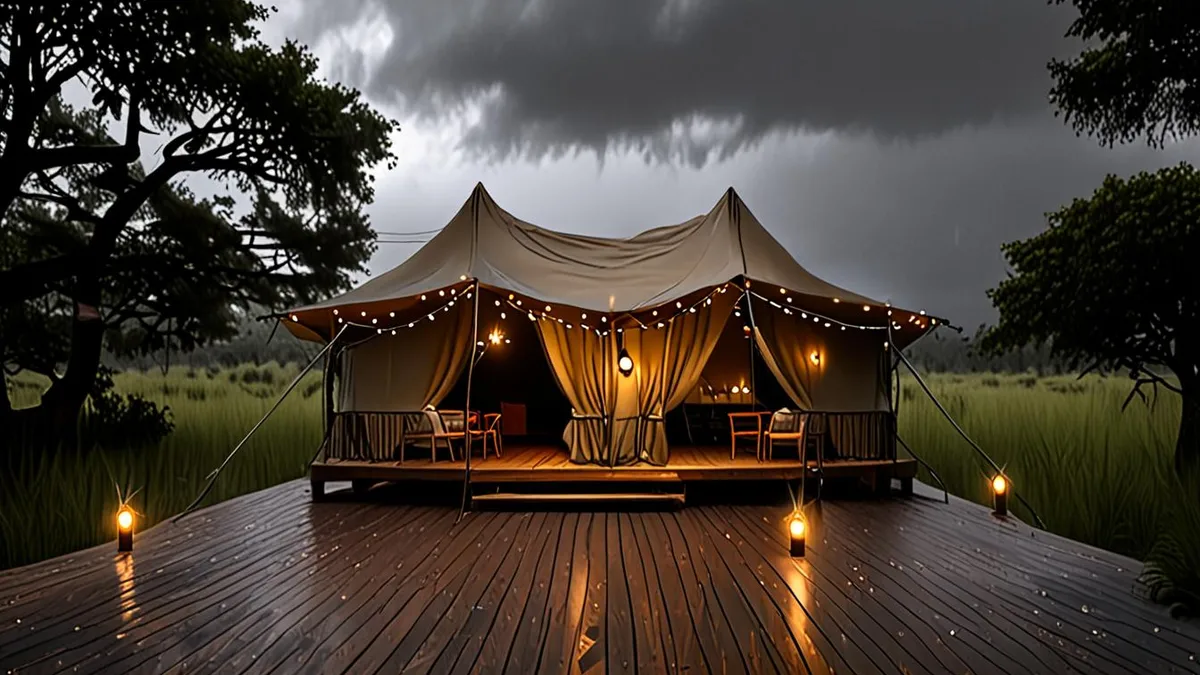
Once you are back inside, though, the mood changes completely. Warm interior lighting, a covered deck and the sound of rain outside make rainy evenings feel cozy rather than miserable. Bring a book or a deck of cards and the storm becomes part of the charm instead of a problem.
Choosing a Glamping Site That Handles Wet Weather
The single biggest factor in a comfortable wet-weather stay is how the site was built. A well-constructed unit keeps you dry through an entire storm, while a cheaply pitched one can leave you mopping the floor at 2 a.m. Before booking, it helps to understand the difference between dome and safari tent construction, and our guide to choosing a glamping dome or safari tent for first-timers covers the basics in detail.
Start with the platform. Domes or safari tents set on raised wooden platforms typically sit 30-60cm above the ground, which keeps the interior dry even when the surrounding ground turns to mud. Tents pitched directly on grass are far more vulnerable to water pooling and seeping in during sustained rain.
Then check the fabric. Quality glamping tents use canvas or PVC with a 2000-3000mm waterproof rating, and the seams should be sealed rather than simply stitched. If a listing does not mention this, ask the host directly.
Beyond the tent itself, think about how you will move around the site. These questions are worth asking before you confirm a booking:
- Covered walkways or short distances: are shared bathrooms and the dining area reachable without a long exposed walk, or does the site offer covered paths between buildings?
- Umbrellas on hand: does the site keep umbrellas available for guests, so you are not buying one at the nearest town every time a shower starts?
- Drying racks: is there somewhere to hang wet jackets, towels and shoes overnight, ideally in a warm or ventilated space?
- Indoor seating for rainy afternoons: is there a lounge, cafe or covered common area where you can comfortably spend a few hours when the storm will not quit?
A site that answers these easily has almost certainly hosted plenty of rainy-season guests before, and it usually shows in how well the whole property holds up.
When to Go: Timing Your Rainy-Season Glamping Trip
Timing makes an enormous difference to how much you enjoy a wet-weather stay. In Southeast Asian highlands, the wet season runs roughly May to October, with the heaviest downpours in June to August. During those peak months, rain can be frequent and intense, and trails stay muddier for longer.
Why shoulder months are the sweet spot
The shoulder months of May and October offer a better deal on almost every front. Showers tend to be shorter, the landscape is at its greenest, and rates often drop 20-40% compared to peak dry-season prices. If you want a deeper look at how the year unfolds in these regions, our article on the best seasons for glamping in Southeast Asia’s cool highlands breaks down each period in detail.
Plan around the daily storm window
Even in the wet season, most rain arrives as afternoon thunderstorms lasting around 1-3 hours, though overnight rain can continue much longer. That gives you a predictable rhythm: plan hikes, viewpoints and outdoor activities for the morning, and treat the afternoon as your reading-and-napping window. Mornings are often clear and cool, which makes them the best hours to be out anyway.
As for booking, 2-4 weeks ahead is usually enough in the shoulder months, when availability is still good and you can be selective about which unit you get. In the peak months of June to August, book earlier to secure the raised, well-built units that handle rain best.
Packing for Wet-Weather Glamping
Packing well is the difference between a soggy ordeal and a cozy adventure. Rain changes what matters in your bag: fabrics that dry fast, layers that handle a sudden downpour, and protection for anything with a battery. If you want a broader starting point, this practical glamping packing checklist covers the basics, then you can layer on the wet-weather items below.
Start with clothing. Cotton jeans and heavy sweatshirts stay wet for a day or more in humid conditions, so favor synthetic or merino pieces you can rinse and hang overnight. Footwear matters just as much: the path from your tent to the dining area will turn to mud, and smooth-soled sneakers become ice skates on wet wooden walkways.
Before you zip up your bag, run through this list:
- Rain jacket with a hood — choose one with pit zips or vents so you don’t steam from the inside while hiking in humid conditions.
- Dry sacks or waterproof pouches — sort electronics, passports and spare batteries into separate sacks so one leak doesn’t ruin everything at once.
- Slip-resistant sandals or waterproof shoes — deep lugs grip muddy slopes far better than flat soles, and sandals let soggy feet breathe at night.
- One spare pair of socks per day — rotating through dry socks is the simplest way to avoid blisters and misery on multi-day stays.
- Microfiber towel — it wrings nearly dry and handles tent-floor puddles, wet hair and damp gear far better than a standard towel.
- Small moisture absorber or deodorizer — a compact tub placed near your bedding fights the musty smell that humidity leaves inside a closed tent.
- Headlamp with fresh batteries — keep it hanging by the tent door so you can find it instantly instead of digging through your bag in the dark.
One last tip: pack everything in resealable bags inside your main luggage. Even a well-sealed tent can let humidity creep in over several days, and dry clothes behind a second barrier feel like a small luxury after a long afternoon storm.
Making the Most of a Rainy Day at the Camp
Here’s the secret experienced rainy-season travelers know: the rain rarely lasts all day. Most wet-season storms arrive in the afternoon, dump their load for a couple of hours, and move on. That gives you a natural rhythm — long, clear mornings outside, then a built-in break while the sky does its thing.
Treat that afternoon window as the best part of the day, not a wasted one. Bring a book you’ve been saving, a deck of cards or a travel board game, and settle onto your covered deck with the rain drumming overhead. If the clouds part afterward, head outside quickly — evening skies after a storm can be surprisingly clear, and stargazing from your deck beats any planetarium.
Ask Before You Arrive
A quick message to your host a few days before check-in pays off. Ask whether there’s a covered common area where guests gather, whether hot drinks are served through the day, and what indoor activities are on hand — some sites keep shelves of books and games, others can arrange cooking classes or craft sessions when the weather turns. Knowing what’s available lets you pack lighter and plan realistically.
Don’t Underestimate the Chill
Wet season doesn’t mean warm nights in the highlands. Temperatures in cool spots like Da Lat or the Cameron Highlands drop to 15-22°C after dark, and damp air makes it feel sharper. Blankets go fast on busy nights, so request extras when you book rather than shivering until morning. A hot drink in hand, a warm blanket and rain on the canvas — that’s the version of glamping in the rain people remember fondly.
Common Rainy-Season Problems and How to Handle Them
Even at well-run sites, wet weather brings a few predictable hiccups. None of them ruin a trip if you handle them calmly and quickly, so it helps to know what’s normal and what needs action.
First: small leaks happen. In a sustained heavy downpour, water can creep through a seam, a zip or a guy-line anchor even on a quality tent. This doesn’t mean your unit is defective — canvas structures flex and settle. The moment you notice a drip, tell staff. Good hosts will re-tension the canvas, apply a fix, or move you to another unit without fuss. Staying silent and putting a towel under the leak helps nobody.
Condensation is the other common complaint, especially in domes. Your breath and body heat meet a cool wall and turn to moisture — it’s physics, not a leak. Crack the vents before you sleep and run the fan if your unit has one; airflow overnight keeps walls drier and bedding fresher.
Access is the issue that catches people off guard. Unpaved roads to remote sites can flood or turn impassable after big storms, so confirm with your host the day before you arrive that the route is open. They know current conditions better than any map app.
- Report leaks with specifics — point out exactly where water enters (seam, zip, floor edge) so staff can fix the right spot on the first try.
- Wipe dome walls with your microfiber towel in the morning — drying condensation promptly prevents mildew smells building up over a multi-night stay.
- Ask your host about alternative access routes — many sites have a second track or an arranged pickup that works when the main road floods.
- Keep a buffer day in your itinerary — if a storm delays a transfer or a boat, a spare day absorbs the disruption instead of costing you a flight.
- Save the host’s direct contact details — mobile signal can drop during storms, and having a number that works offline saves scrambling when plans change.
Handle these four or five situations as they come and you’ll find most rainy-season problems are minor inconveniences, not trip-wreckers.
Is Glamping in the Rain Worth It?
So, is glamping in the rain worth it? If you book without knowing what a downpour does to the experience, it can catch you off guard: muddy paths between your tent and the dining area, a loud drumming on the canvas roof, and bedding that feels slightly damp if the tent isn’t well ventilated. But rainy-season glamping also trades some outdoor freedom for lower prices, fewer crowds and a uniquely cozy atmosphere you simply don’t get in the dry season.
The experience works best when you pick a raised, well-built unit and pack for wet conditions. With realistic expectations about mud, humidity and afternoon storms, a wet-weather stay can easily become a highlight of your trip rather than a compromise. Have you gone glamping in the rain? Share your story in the comments or pass this article along to a friend planning the same trip.