The photos always look tempting: a canvas tent glowing at dusk, a proper bed inside, maybe a wood-fired hot tub on the deck. But if you have never booked a stay at a glamping site, it is hard to know what you are actually paying for. Will you have your own bathroom, or a walk to a shared shower block? Is $150 a night reasonable, or should a tent with a view cost half that? First-timers often overpay for less comfort than they expected, or skip glamping entirely because the pricing seems random.
This guide walks through what glamping really involves, unit by unit. We cover what a glamping site actually is, the facilities you can realistically expect, how nightly costs break down, and what your dining options usually look like. We also explain when and how to book, and how to choose a site that matches your comfort level and budget, so the reality matches the photos.
What a Glamping Site Actually Is
Glamping sits comfortably between a regular campsite and a boutique resort. The idea is simple: you get tented or cabin-style accommodation surrounded by nature, but with hotel-like comfort built in. There is no pitching a tent in the dark, no sleeping pad on hard ground and no hauling gear from your car. Glamping operators handle the setup so you can focus on the setting.
The range of accommodation types is wider than most people expect. Each style offers a slightly different balance of space, insulation and atmosphere:
- Bell tents — round canvas tents, often the simplest and most affordable option at a site
- Safari tents — larger canvas units on raised platforms, usually with more furniture and standing room
- Yurts — circular, lattice-walled structures with a domed roof, common in cooler climates
- Geodesic domes — dome-shaped structures, frequently with large windows or transparent panels for stargazing
- A-frame cabins — solid wooden builds with sloped roofs, closer to a small cabin than a tent
- Treehouse-style builds — elevated units, often the most photographed and the quickest to sell out
What you arrive to
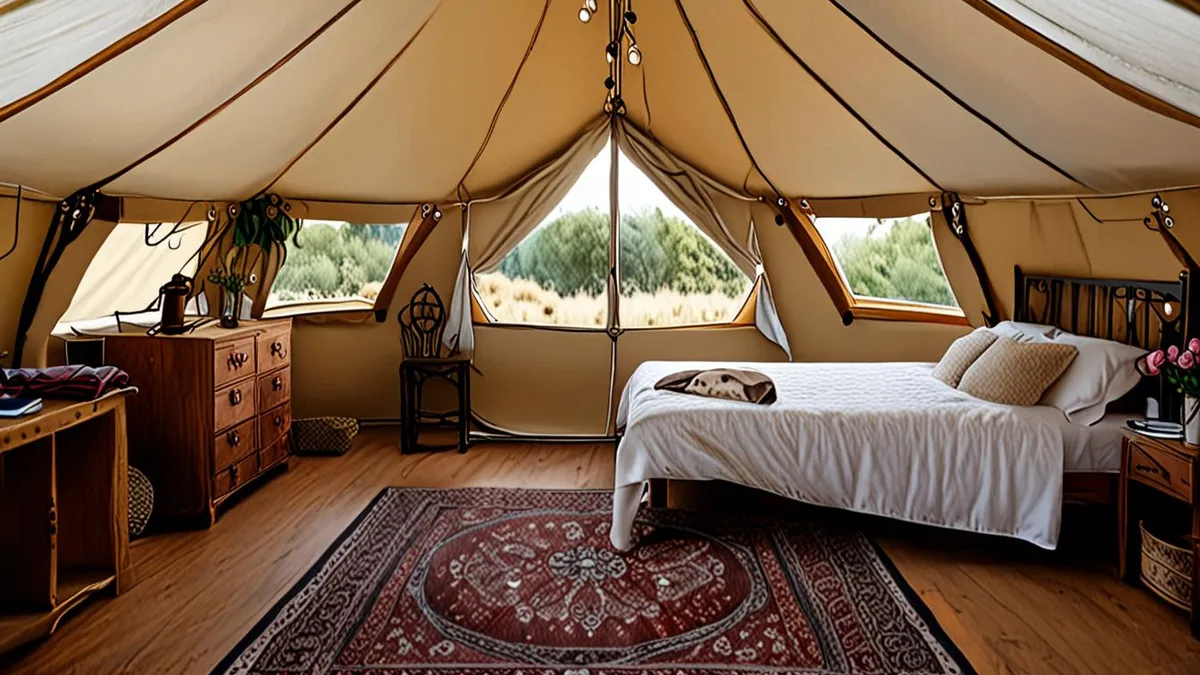
Unlike a regular campsite, a glamping stay starts the moment you walk in. Your bed is already made with real linens, the interior is furnished with seating, lighting and storage, and in most cases you bring nothing except your clothes and toiletries. Some sites add extras like bathrobes, coffee-making equipment or a small cooler, but the baseline is a ready-to-use, furnished space. If you have avoided camping because of the gear and the ground, glamping removes both obstacles while keeping the outdoor setting that makes camping appealing.
Facilities You Can Expect at a Glamping Site
Bathroom arrangements are the single biggest comfort difference between price tiers. Mid-range and luxury units usually include a private en-suite bathroom with a hot shower and flush toilet, built into the unit or attached as a small annex. Budget tents, on the other hand, often share a clean bathroom block a short walk away — typically 30 to 100 meters from your tent. Neither setup is wrong, but you should know which one you are booking before you pay.
Inside the unit, expect a real bed with proper linens, lighting you can actually read by, and charging outlets or a power bank for your devices. Most units also come with some kind of outdoor space: a small deck, a fire pit or a BBQ. Beyond your own tent, most sites offer shared facilities that shape the overall experience.
- Outdoor pool or plunge tub — common at larger sites in warm climates; plunge tubs and wood-fired hot tubs are more typical at smaller, scenic properties
- Communal kitchen — useful at self-catering sites, usually equipped with a stove, fridge and basic cookware, though quality varies a lot
- Lounge areas and hammocks — shared covered spaces where you can read or meet other guests on rainy afternoons
- Free parking — standard at most sites, but worth confirming if you are driving to a remote location
Connectivity is the wildcard. Some sites advertise Wi-Fi in all units, while others deliberately offer a digital detox with no signal at all. If you need to work or stay reachable, check this before booking rather than assuming.
How Glamping Costs Break Down
Glamping pricing is less mysterious once you know what drives it. Nightly rates typically run from about $80 for basic bell or safari tents up to $400 for domes and lodges with premium views. Basic safari tents and bell tents sit at the lower end of that range, around $80 to $150, while lodges and geodesic domes with the best settings reach $200 to $400. Where a site falls in that spread is rarely accidental.
The three biggest price drivers
Location, unit type and bathroom access determine most of what you will pay. A dome overlooking a lake will cost several times more than a bell tent near the entrance of the same region. Unit type matters because larger, solid structures with insulation and heating cost more to build and maintain. Bathroom access is the quiet one: en-suite units usually cost noticeably more than tents that rely on a shared bathroom block, so if a private shower is not important to you, choosing a shared-facility tent is one of the easiest ways to cut the rate.
Add-ons and timing
The headline rate rarely covers everything. Breakfast, firewood, airport transfers and activities such as guided hikes or kayak rentals are often priced separately from the room rate, and these extras can add up quickly over a multi-night stay. Ask for a full price list before booking so you can compare sites on total cost rather than the advertised nightly figure.
Timing also moves the number. Midweek stays and shoulder-season dates often bring rates down 20 to 30 percent compared with weekends in peak months. If your schedule is flexible, shifting a two-night stay from Friday and Saturday to Tuesday and Wednesday is often the simplest saving available.
Meals and Dining Options
Food at a glamping site can be anything from a do-it-yourself affair to a full dining experience, so this is one area where you really need to read the fine print. At one end of the scale, you get a shared or private kitchen and handle your own meals. At the other, some sites offer full-board packages that typically add $20–$50 per person per day on top of your room rate.
Many glamping sites include breakfast in the nightly price, or at least run a small on-site café serving coffee and simple meals. This matters more than you might think: some of the most scenic sites sit far from any town, and if there is no restaurant on site and no kitchen access, you could end up driving a long way for dinner. Always check what food options exist before booking, especially in remote areas.
Cooking outdoors is a big part of the appeal. Fire pits and BBQ kits are common at many sites, but setups vary widely. Before you pack, confirm exactly what is provided so you don’t arrive with ingredients and nothing to cook them in.
- Self-catering kitchens: communal kitchens usually include a stove, fridge and basic equipment, but quality varies — some are well stocked while others offer little more than a kettle and a microwave.
- Full-board packages: these typically cover dinner as well as breakfast, which is convenient at remote sites, but check whether drinks and snacks are included or billed separately.
- BBQ and fire pit kits: some sites supply grills, charcoal or firewood and full utensil sets; others rent the equipment or expect you to bring your own, and firewood is often a paid extra.
- Nearby alternatives: if there is no on-site dining, ask the host which restaurants or small shops are within driving distance and how long the trip takes.
When and How to Book
Timing your booking well can make the difference between the dome with the view and the leftover unit by the fence. In temperate destinations, peak glamping season generally runs from May to September, when the weather is warmest and the nights are comfortable. Mountain and tropical sites follow their own rhythm instead — they tend to be busiest during their local dry season, so check the climate pattern for your specific destination before locking in dates.
As a rule of thumb, most glamping sites require booking 2–4 weeks ahead in high season. For the most popular domes and lodges, which often have only a handful of units on the entire property, plan 1–2 months ahead to have a real choice of dates and layouts. Last-minute deals do exist, but at small sites with limited inventory you shouldn’t count on them.
Read the cancellation policy before you pay
Small, family-run glamping operations often have stricter cancellation terms than hotels, and some keep deposits even for cancellations made well in advance. Read the policy carefully before booking, and if your travel plans depend on weather or a connecting flight, consider whether a flexible rate is worth the small extra cost.
Know the atmosphere you’re signing up for
Glamping sites differ a lot in vibe. Some are adult-only and quiet, aimed at couples who want stargazing and silence, while others are family-friendly with playgrounds and group activities. Check this before booking, because a romantic dome next to a site full of energetic kids — or the reverse — can spoil the stay. For a sense of what a cooler mountain night in a tented setting feels like, this glamping experience in Da Lat’s highlands gives a good picture of what to expect.
How to Choose the Right Glamping Site for You
The right glamping site depends less on the prettiest photo and more on how well the comfort level matches your trip. If this is your first glamping experience and you’re used to hotels, skip the budget tent-only sites with shared bathroom blocks — you’ll likely be disappointed stepping outside at midnight for a shower. Paying a bit more for an en-suite unit removes the most common shock for first-timers.
Distance is the other big trade-off. The most remote, scenic sites often cost more once you factor in transfers and meals, since there may be nothing walkable nearby. A site closer to town might feel less wild, but it gives you cheaper dining options and easier access to supplies. Decide which matters more to you before comparing prices.
Reviews are your best friend here, and two complaints come up again and again: temperature control inside tents and noise between units. Tents can get surprisingly hot in the afternoon and chilly at night, and thin canvas walls carry sound. Look at recent reviews specifically for comments on heating, cooling and how close the units sit to each other.
- Check the bathroom setup in detail: if bathrooms are shared, look for how many units use each block and whether the walk is lit at night — a short, well-lit path is a very different experience from a dark trek.
- Look at unit placement on the site map: units near the parking area, reception or a communal fire pit tend to be noisier; ask for a unit at the far end if quiet is a priority.
- Ask about weather-proofing: some tents come with proper insulation, heaters or fans, while others are purely fair-weather — this varies even within the same site depending on unit type.
- Tally the full cost: add meals, transfers, activity fees and extras like firewood to the nightly rate before comparing sites, because a cheaper headline price can end up costing more overall.
Wrapping Up Your Glamping Plans
Glamping sits between a campsite and a boutique resort: you get a real bed with linens, either an en-suite bathroom or a shared block a short walk away, and outdoor extras like fire pits, decks and sometimes a pool. Expect to pay anywhere from roughly $80 for a simple bell or safari tent to $400 for a dome or lodge with premium views, and units with a private bathroom usually sit at the higher end of that range.
Planning makes the difference between a great stay and a disappointing one. Reserving 2–4 weeks ahead during the May–September peak keeps the best units within reach, and comparing the comfort level, dining setup and total cost — including meals and transfers, not just the headline rate — ensures the stay matches the photos. If this helped you plan your trip, leave a comment or share the article with a fellow traveler.