Booking a villa with a private pool sounds like the ultimate upgrade, yet many travelers pay premium rates only to arrive and find a plunge pool overlooked by the neighboring rooftop, or water that hasn’t been cleaned in days. The words “private pool” cover everything from a two-meter soak tub to a full-length swimming pool behind solid walls, and listings rarely make the difference clear.
This guide walks you through the whole process: decoding what “private pool” actually means in a listing, judging whether the nightly rate matches what you’re getting, choosing the right area, timing your booking for the best value, spotting red flags before you pay, and the exact questions to ask a host before committing to a deposit. Follow these steps and you’ll be far more likely to end up with a pool villa that genuinely earns its price.
What ‘Private Pool’ Actually Means in Villa Listings
The phrase “private pool” is one of the loosest terms in vacation rental listings. It can describe a genuine full-length swimming pool enclosed by privacy walls, or a plunge pool barely longer than a bathtub. Study the photos carefully and look for reference points: a pool under 4 meters long is a plunge pool, not a swimming pool, and both types get labeled the same way. If you plan to actually swim or play in the water with kids, that difference matters a lot.
Spotting shared pools disguised as private ones
Some listings use photos of a shared pool taken from an angle that hides the other units. Warning signs include multiple sun loungers lined up (more than one couple would need), wide aerial shots where you can spot adjacent rooftops, and descriptions that say “pool access” rather than “private pool.” If the listing never states “exclusive use,” assume it might be shared and ask directly.
Reviews are your best tool for verifying privacy. Search them specifically for words like “private,” “overlooked,” “neighbors,” and “view from the pool.” Villas within 100 meters of neighbors often have pools that are at least partially visible from surrounding buildings, even when the listing photos suggest otherwise. Finally, message the host before booking and confirm the pool is cleaned daily. A pool that looks inviting in photos can turn green within days without regular maintenance, and daily cleaning is a reasonable expectation at private pool villa prices.
How to Judge Whether the Price Matches the Pool
Once you know what you’re actually getting, the next question is whether the price makes sense. In Southeast Asia, a genuine private pool villa typically costs USD 80-250 per night, depending on size, location and finish. Use that range as your baseline: a rate well inside it for a properly private, well-maintained villa is fair, while rates above it need to be justified by something concrete.
What the premium should buy you
Higher rates can be worth it when they come with visible upgrades: a larger pool you can actually swim in, full privacy walls rather than low fencing, comfortable poolside loungers, and shaded decking that lets you use the pool area through the hottest hours. Compare two or three villas at similar prices and ask what specifically makes one more expensive. If the answer is just “better location,” check whether that location matters for your trip.
Also check what’s included. Cheaper listings sometimes advertise a low nightly rate, then charge extra for daily housekeeping or pool maintenance, which can erase the savings. Read the inclusions list carefully and factor the add-ons into the real total.
For groups, run the per-person math. A 3-bedroom pool villa often beats booking three separate hotel rooms, both in cost and in the shared space you get: a living area, kitchen and, of course, a pool that’s yours alone. When the per-person price comes in below comparable hotels, the villa is usually the better deal.
Choosing the Right Area for Your Pool Villa
Where your villa sits shapes both the price and the experience. Beachfront and popular rice-field locations like Canggu command the highest pool villa prices, while inland villages a few kilometers out offer noticeably better rates for similar properties. If you want a feel for what each pocket of Canggu offers before comparing prices, this guide to the best areas to stay in Canggu for first-time visitors breaks down the neighborhoods in detail.
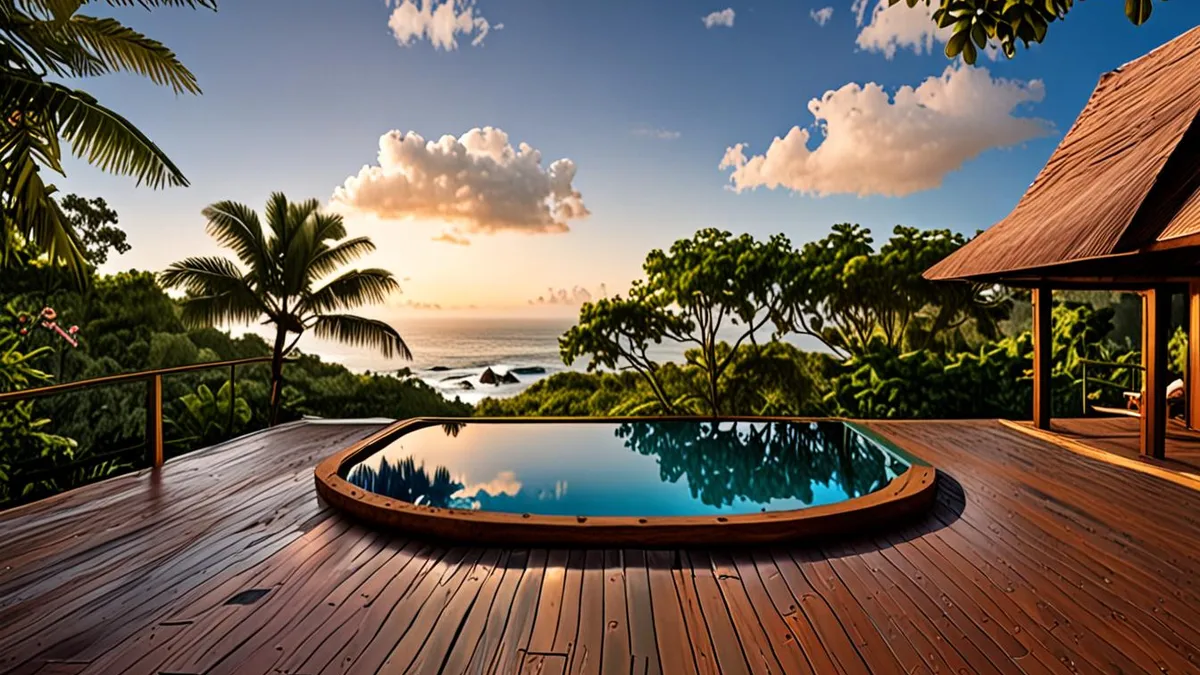
Hillside and jungle settings deserve special mention: they offer privacy naturally, because steep terrain and dense vegetation reduce the risk of overlooked pools. If total seclusion is your priority, these settings often deliver more privacy per dollar than a flat beachside plot with walls added on.
The trade-off is convenience. Before booking, map the distance to beaches, cafes and minimarkets, because isolated villas can add 15-30 minutes of scooter travel per trip. That adds up quickly if you’re heading out several times a day.
- Nightlife zones suit couples who want bars, beach clubs and restaurants within walking distance, and who won’t mind some noise carrying over the pool walls at night.
- Quieter inland areas suit families, who get more space and lower rates, and who usually have their own transport or plan fewer outings per day.
- Rice-field edge locations offer the postcard views many travelers want, but check whether the access road is paved and passable after rain before committing.
Timing Your Booking for the Best Value
When it comes to private pool villas, timing your booking matters almost as much as choosing the right one. The same villa can swing wildly in price depending on when you reserve it, and the best properties in popular areas often get snapped up early. Hosts of the most desirable villas rarely need to discount, so waiting rarely works in your favor. A little planning goes a long way here, and it costs you nothing except a bit of calendar discipline.
- Book 3-6 months ahead. This window gives you the widest choice of private pool villas at standard rates. You can compare layouts, pool sizes and locations properly instead of settling for whatever is left, and hosts are more likely to answer detailed questions before their calendars fill up.
- Expect peak season premiums. For the exact same villa, peak season rates typically run roughly 30-50% above shoulder season prices. If your dates are flexible, shifting your trip by a few weeks can save you a meaningful amount without changing anything about the villa itself.
- Target shoulder months. May-June and September-October usually offer lower rates with still-reliable weather in most of Southeast Asia. You get the same pool, the same privacy and often quieter surroundings for noticeably less money.
- Watch for last-minute deals, with caveats. Some hosts drop prices 2-3 weeks before arrival to fill empty calendars. The catch is that you are choosing from a much smaller pool of remaining villas, and the ones still available may be the ones others passed on.
It also helps to set alerts or check rates for your shortlisted villas every couple of weeks once you know your travel window. Prices for the same property can vary between booking platforms and direct inquiries, so it pays to compare a few sources before committing. If you find a good rate on a villa that ticks your boxes, don’t wait too long to confirm, because well-priced private pool villas in popular areas can be booked out months in advance.
If you want a fuller breakdown of how booking windows work for villas specifically, this guide on when to book a villa in Bali covers the details. Plan ahead where you can, and treat last-minute discounts as a bonus rather than a strategy.
Red Flags That a Pool Villa Isn’t Worth It
Not every listing with the words “private pool” deserves your money. Some villas photograph beautifully but disappoint in person, and the warning signs are usually visible before you pay anything. Learning to spot them saves you from arriving to find a cramped plunge pool wedged between neighboring rooftops.
Start with the reviews, because they are the most honest source of information you have. Then look critically at the photos and at how the host responds when you ask direct questions. If you are traveling with kids, it is especially important to vet the villa carefully, and the advice in this guide on choosing a private villa for a family vacation applies here too.
Here are the red flags to watch for:
- Thin pool-related reviews. Well-reviewed pool villas commonly show 20+ recent reviews mentioning the pool. If a listing has plenty of reviews but almost none discuss the pool, guests may be quietly underwhelmed by it, so read the negative reviews closely for clues about privacy or maintenance.
- Tightly cropped photos. Professional shots that frame only the pool and a sliver of decking often hide nearby buildings, shared walkways or the neighbor’s balcony. Ask for a wide shot of the whole property, or check the map to see how close surrounding buildings are.
- Evasive host answers. If a host cannot or will not tell you the pool’s depth, dimensions or cleaning schedule, assume there is a reason. A well-run villa knows these details instantly and answers without hesitation.
- Rates far below the local market. If a price sits dramatically under what comparable villas in the same area charge, be suspicious. Bargain-basement rates usually signal a shared pool, a plunge pool masquerading as a swimming pool, or a poorly maintained property. Compare several similar listings before you judge any single price.
One red flag alone does not necessarily disqualify a villa, but two or more together should make you walk away. There are enough genuinely good options out there that settling is rarely necessary.
Questions to Ask Before You Pay the Deposit
Before you hand over a deposit, a few direct questions can save you from an expensive disappointment. Hosts of quality villas answer these quickly and gladly; hosts of problem properties tend to get vague. Treat the responses themselves as a signal about how the villa is run.
Get the pool specifics in writing
Ask for the exact pool dimensions and depth, not just “large pool” or “family friendly.” A pool that is 2 meters wide and 1 meter deep may suit a couple who wants to cool off, but it will frustrate anyone who actually wants to swim laps, and shallow water changes your supervision needs if you are traveling with children. Getting numbers in writing also gives you something to point to if the villa does not match the listing on arrival.
It also helps to ask for recent guest photos of the pool area rather than relying on the professional listing shots. Real photos show the current state of the tiling, the loungers and the surrounding walls, and they often reveal how overlooked the space really is.
Comfort and cancellation details
Confirm whether the pool is heated or shaded at any point of the day. In cooler highland areas, an unheated pool can be too cold to enjoy for much of the day, and a pool that sits in full shade may never warm up either. Ask which hours the pool gets direct sun so you know when it will actually be pleasant.
Finally, clarify the cancellation terms before paying anything. If the villa turns out not to match the listing, you want to know exactly what portion of your deposit is refundable and under what conditions. A host who resists putting basic terms in writing is telling you something important about the booking experience ahead.
Finding a Private Pool Villa That Earns Its Price
So how do you spot a private pool villa that actually justifies its rate? The answer comes down to three things: the pool is genuinely private, properly sized and well maintained. If reviews confirm real privacy, the dimensions suit your group and the host answers questions about cleaning clearly, you are likely looking at a villa worth paying for.
Timing matters just as much. Booking 3-6 months ahead secures the widest choice at standard rates, while targeting shoulder months like May-June or September-October often means fairer prices for the same villa. And never skip the direct questions about pool size, privacy and cleaning before paying a deposit, since those answers separate worthwhile villas from overpriced listings. Found this guide useful, or have a pool villa tip of your own? Leave a comment or share it with a fellow traveler.