You’ve set your nightly budget, opened a booking app, and now you’re stuck between three tabs: a hostel vs budget hotel vs capsule hotel, all in the same city and all within reach of your price range. Each one promises a different kind of stay, and picking wrong can mean noisy nights, wasted money or a lonelier trip than you planned.
This guide breaks down the decision properly. We’ll compare what each option really costs per night, look at privacy and space in dorms, private rooms and pods, and weigh up the social side of hostel life. You’ll also find practical advice on safety, cleanliness and reading reviews, plus the destinations where each stay type shines. Finally, we’ll help you match the option to your specific trip, because the right bed for a two-night city stopover is rarely the right bed for a month of backpacking. By the end, you’ll know exactly which one suits you.
Price Comparison: What Each Stay Type Really Costs Per Night
Let’s start with the numbers, because price is usually what pushes travelers toward one of these three options in the first place. The good news is that the price gaps between them are fairly consistent across most of the world, which makes comparing them straightforward.
Hostel dorm beds are typically the cheapest option in almost every market. In Southeast Asia, expect to pay around $10-30 per night for a dorm bed, while in Europe the same bed usually runs $25-60. If your priority is spending as little as possible on accommodation, nothing else comes close.
Budget hotels and capsules: the middle ground
Budget hotel private rooms usually run $25-60 per night in Southeast Asia and $60-120 in Europe. That works out to roughly double to triple the cost of a dorm bed, but you’re paying for a lockable door and your own bathroom rather than just a mattress.
Capsule hotels generally cost $20-50 per night. They sit in an interesting position: often cheaper than a budget hotel but pricier than a dorm bed, offering a compromise between the two.
One option many travelers overlook is the private hostel room. These can undercut a comparable budget hotel by 30-50%, giving you a private space at a fraction of the hotel price, often with hostel perks like a shared kitchen thrown in. If your dates are flexible, it’s worth checking hostel listings even when you want your own room.
Privacy and Space: Dorm Beds, Private Rooms and Capsule Pods
Price is only half the equation. How much space and privacy you get for your money varies dramatically between these three options, and this is where the real trade-offs appear.
Dorms usually sleep between 4 and 12 guests per room. That means shared noise, lights going on and off, and limited personal space around your bunk. If you’re the kind of person who needs darkness and silence to sleep, a top bunk next to a snorer can turn even a cheap bed into poor value.
Where privacy actually comes standard
Budget hotels are the strongest choice here. You get a lockable private room with your own bathroom, which makes them the obvious pick for couples and light sleepers. Nobody’s rustling plastic bags at 3 a.m., and you can leave your belongings out without a second thought.
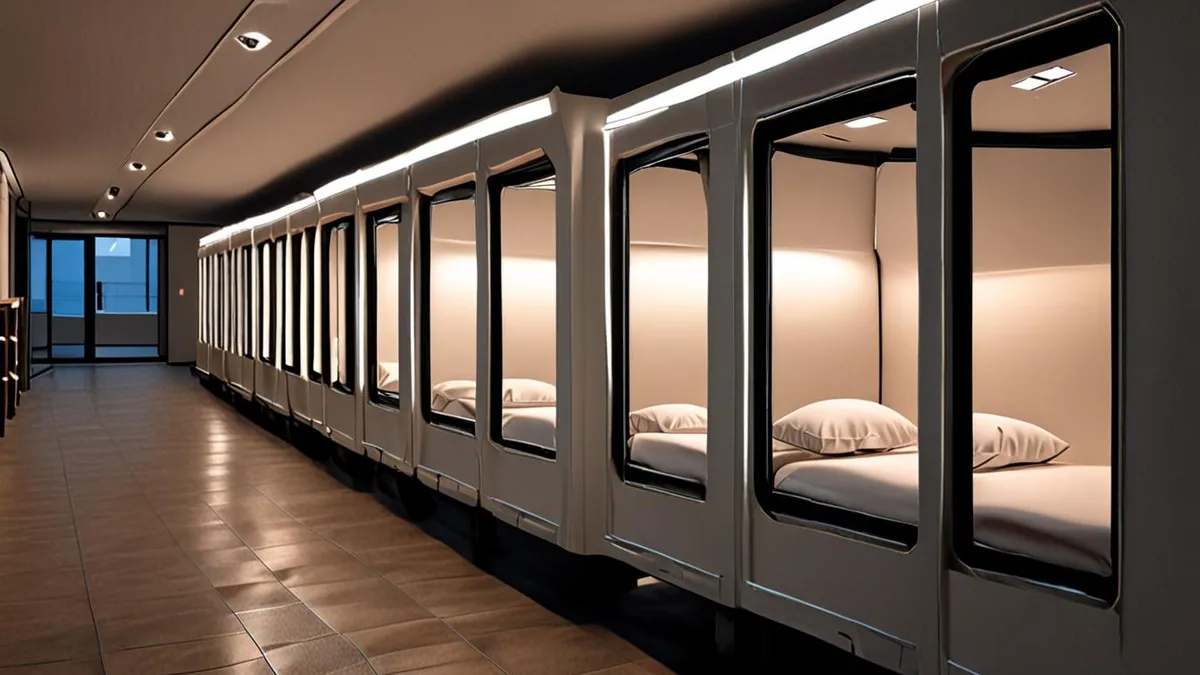
Capsule pods hold one guest in a space around 1.2m wide and 2m long. You’re private for sleeping, with a door or curtain shutting out noise and light, but bathrooms and lounges are shared with other guests. Think of it as a step up from a dorm bed but not a full hotel room.
One practical detail catches many first-time capsule guests off guard: luggage usually goes in lockers rather than inside the pod, since pods are built for a person, not a suitcase. Pack with that in mind, and keep anything you’ll need overnight in a small day bag with you.
Social Life and Solo Travel: When a Hostel Wins
If you’re traveling alone, where you sleep shapes who you meet. This is the one area where hostels don’t just compete with hotels and capsules, they dominate.
Hostels offer communal kitchens, bars and organized tours, which makes them the easiest place to meet other travelers without any effort on your part. You arrive knowing nobody and can be joining a dinner group within an hour. Beyond the social side, there’s a practical financial benefit too: solo travelers in hostels often split day-trip costs like taxis and guided hikes with roommates, turning expensive activities into affordable ones.
Budget hotels and capsules suit a different kind of traveler: someone who wants daytime socialising on tours and in cafes, but quiet, anonymous evenings. There’s nothing wrong with that, and for many people it’s exactly the right balance.
It’s also worth knowing that some hostels run private rooms. This gives you the best of both worlds, since you can join the social scene in the common areas without actually sharing a dorm.
- Communal kitchens let you cook alongside other guests, which is one of the most natural ways to strike up conversations and often saves money on eating out at the same time.
- Organized tours and pub crawls take the awkwardness out of meeting people, since everyone signed up knowing it’s a group activity.
- Splitting costs on taxis, boat rentals or guided hikes with new friends can make activities you couldn’t otherwise afford suddenly realistic.
- Private hostel rooms mean you can retreat from the noise at night while still having a social base during the day.
Safety, Cleanliness and Reviews Across All Three Options
Safety and cleanliness vary more within each stay type than between them, which is why reviews matter more than the category label. Before booking any of the three, scan recent reviews for mentions of lockers, key-card access and whether staff are present at night. A hostel with a 24-hour reception and individual lockers can feel safer than a careless budget hotel two streets away.
In dorms, a few small choices make a difference. If you’re cautious, pick a lower bunk near the door, keep your valuables in the provided locker and bring your own padlock, since many hostels expect you to supply one. A headlamp and a small bag that fits under your bunk also help you settle in without disturbing roommates.
Shared bathrooms are the weak point
The most common complaint across both hostels and capsule hotels is the state of shared bathrooms. Read hygiene-focused reviews carefully and look for comments on cleaning frequency, water pressure and how busy the facilities get in the morning. One or two mentions of dirty bathrooms in recent reviews should be treated as a pattern, not a one-off. If you’re unsure how to weigh them, it helps to know how to read hotel reviews and spot red flags before booking. Budget hotels with private bathrooms sidestep this issue entirely, which is part of what you’re paying for.
Finally, remember that capsule hotels and budget hotels usually run front desks around the clock. If your flight lands late, that matters: you can check in at 1 a.m. without waking anyone or waiting outside. Some hostels offer late self-check-in, but confirm the exact arrangement before you book rather than assuming.
Best Destinations for Each Stay Type
The right stay type often depends on where you’re going, because prices and local habits differ enormously between regions. A dorm bed that feels like a bargain in one country can cost more than a private room in another, so it pays to think regionally before you book.
Where hostels dominate
Southeast Asia remains the classic hostel region, and Thailand, Vietnam and Indonesia are its best-known playgrounds. Dorm beds there are among the cheapest accommodation you’ll find anywhere in the world, and the savings over a private room are often large enough to fund extra days of travel. The hostel scene is well developed too, with communal kitchens, pools and organized tours. If meeting other travelers is part of the plan, this is the region to do it in.
Europe is the opposite case. In expensive cities like Paris, Amsterdam and Zurich, even a modest private room can eat a day’s budget, which makes hostels the better value for many travelers. A dorm bed in Western Europe typically costs more than one in Southeast Asia, but it still leaves far more room for museums and meals than most budget hotels.
Where capsules make sense
Japan and South Korea lead the capsule scene, and pods are a reliable city-center option in Tokyo, Osaka and Seoul. They work especially well when trains run late and you just need a clean, quiet place to sleep before moving on. Expect luggage to be stored in lockers rather than beside your pod, so keep overnight essentials in a small bag.
Bali is a special case: budget hotels and hostels compete closely on price, so the stay type matters less than you’d expect. The neighborhood you pick — beach town, inland hills or the busier south — will shape your trip as much as your choice of bed. It’s worth reading up on how to choose a hotel in Bali, from areas and seasons to budgets before deciding.
How to Choose: Matching the Stay Type to Your Trip
Once you understand what each option costs and offers, the decision usually makes itself. Your travel style, who you’re traveling with and how long you’re staying point clearly to one of the three. Rather than agonizing over it, run through a few quick questions and the right answer tends to fall out on its own. Here’s a simple way to work through it before you book anything.
- Count who’s traveling. Solo travelers get the most out of hostels, couples almost always prefer a private room, and anyone traveling alone on a short stopover should look at capsules. Groups have flexibility: splitting a budget hotel room can be affordable, but a block of hostel beds keeps everyone together.
- Set your nightly budget. If you’re traveling on a shoestring, a hostel dorm is the natural fit. If you can spend more, a budget hotel buys you privacy and your own bathroom. If your budget sits between the two, remember that a private hostel room can undercut a comparable budget hotel by a meaningful margin, so check both before committing.
- Look at trip length. A capsule hotel shines for short city stays of one or two nights, when you only need a place to sleep and shower. For a week or longer, the lack of space and the locker-based luggage storage start to wear, and a room with a desk or window earns its keep.
- Decide how social you want to be. If meeting people is a priority, hostels with communal kitchens and organized tours make it effortless. If you want daytime socialising but quiet evenings, lean toward a budget hotel or capsule.
- Check your arrival time. Late-night arrivals favor options with around-the-clock front desks, which capsule hotels and budget hotels usually provide. If you land in a hostel, email ahead to confirm someone will be there to let you in.
One final habit ties it all together: book early. Booking 2-4 weeks ahead usually secures the best rates across all three stay types, and the advantage grows even sharper in high season, when the cheapest beds and rooms in popular destinations sell out first. Lock in your choice early and you’ll pay less for whichever option suits you.
The Right Bed Depends on the Trip, Not the Price Tag
So which one wins? Hostels cost the least and offer the most social contact, budget hotels buy you privacy and a proper night’s sleep, and capsule hotels sit somewhere in between. There’s no universal ranking, because the right choice depends on what you need from the trip itself.
The cheapest nightly rate isn’t always the best value once you factor in sleep quality and location. A well-placed budget hotel can beat a noisy dorm across town, and a capsule can outperform both for a quick city stopover. Match the stay type to your travel style, and the decision makes itself. If this helped you decide, leave a comment or share the article with a fellow traveler.