Booking a rainforest lodge sounds dreamy until you sit down to compare options and realize you have no idea what you are actually paying for. Is Wi-Fi standard? Is a fan room acceptable? And what counts as a fair nightly rate versus an inflated one? Most travelers hit this wall because lodge websites show beautiful photos but say very little about day-to-day realities.
This guide breaks down what a rainforest lodge typically offers, from standard facilities and room types to meals, guided activities and booking timing. You will see what is usually included in the price, what costs extra, and how the season affects your total bill. We also cover practical realities like generator power, water pressure and travel time from the nearest town, so you can set a realistic budget and avoid surprises before you book.
What a Rainforest Lodge Actually Offers
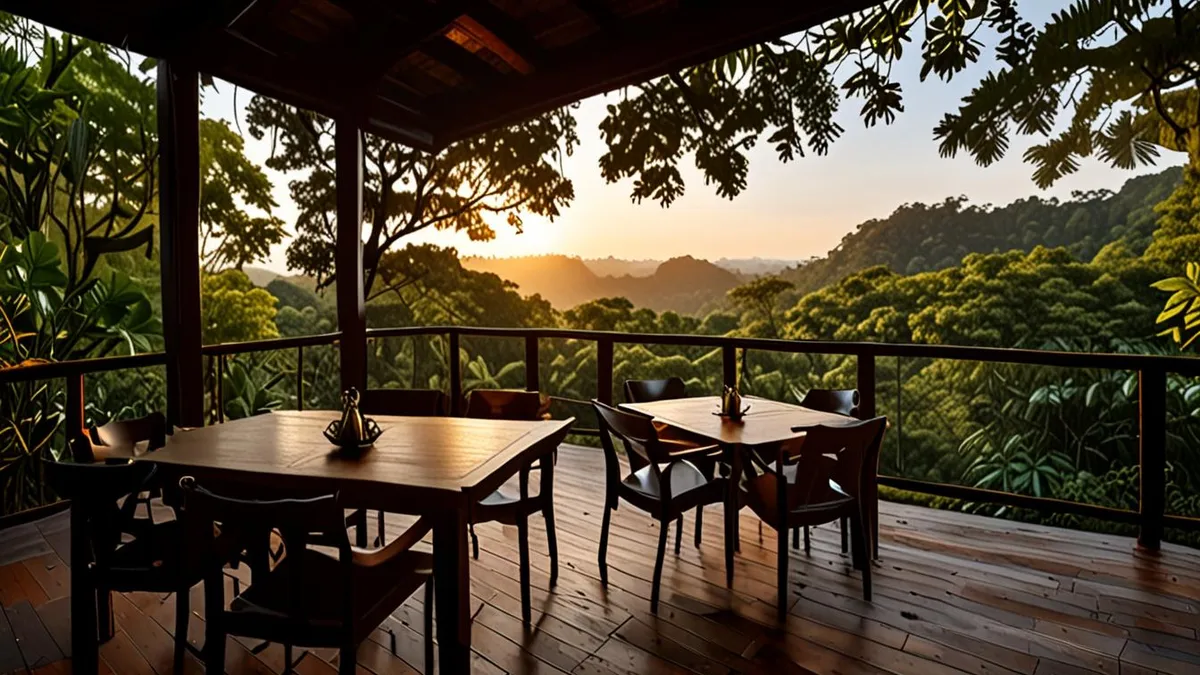
Most rainforest lodges are built around a simple idea: keep guests comfortable without overpowering the forest around them. The heart of nearly every property is an open-air restaurant, usually a large covered space with long tables and views of the trees. Next to it you will almost always find a lounge or deck area with sofas, hammocks or low seating, where guests gather between activities, swap stories about the morning’s wildlife sightings and wait for dinner.
Rooms themselves are typically simple: individual cabins or rooms with en-suite bathrooms, a fan, a decent bed with a mosquito net, and little else in the way of furniture. This is by design rather than a shortcut, since remote locations limit what can be built and shipped in.
Common extras worth looking for
Many lodges add small touches that make a stay more pleasant. These vary by property, but frequently include:
- Hammock terraces on cabins or a shared deck, ideal for reading during the midday heat
- Small plunge pools, common at mid-range and upscale lodges, for cooling off when the trail is muddy
- Book-swap corners in the lounge, where guests leave finished paperbacks for the next arrival
What is usually missing
Set your expectations early on a few points. Budget lodges rarely have air conditioning, relying on fans and open windows instead. Televisions are almost unheard of, even at pricier properties. And Wi-Fi, where it exists at all, is usually limited to the main building and can be slow or unreliable, especially in wet weather. Treat connectivity as a bonus, not a given, and check with the lodge directly if staying online matters to you.
Room Types and What You Pay for Them
Lodge pricing is mostly about comfort level, and the differences between tiers are easy to spot once you know what to look for. At the bottom end, basic fan rooms typically run $40–$80 per night. These are simple rooms, often with shared bathrooms or very basic en-suite facilities, and they suit travelers who plan to spend their days on guided walks rather than in the room.
Mid-range eco-cabins sit around $100–$200 per night and are where most couples and families land. At this level you generally get hot water, mosquito-netted beds, private bathrooms and a bit more space. Upscale eco-resorts, with pools, better food and full board included, reach $150–$400+ per night and often come with their own guides and activity schedules.
Here is what separates each tier in practice:
- Basic fan rooms: expect simple bedding, minimal storage, and windows that rely on screens rather than glass, so insect control matters more than decor
- Mid-range eco-cabins: usually stand-alone units with a small veranda, solar or generator electricity, and staff who can arrange walks and transfers on site
- Upscale eco-resorts: often include airport or town transfers, all meals, and higher-end touches like hot showers with reliable pressure and well-maintained trails
When comparing prices, check whether meals and activities are bundled in. A $180 room with full board can be better value than a $90 room where every meal and walk is charged separately.
Meals, Board Options and Hidden Extras
Food is one of the biggest hidden variables in a lodge stay. The good news is that breakfast is usually included in the nightly rate at most rainforest lodges, typically a simple spread of fruit, eggs, bread and coffee or tea. The better news is that it should be, because room-only rates rarely make sense in remote locations. If the nearest restaurant is hours away by boat or rough road, eating elsewhere is not an option, and a room-only rate just moves the same cost into a separate bill.
Full board and how it is priced
For lodges far from any town, full-board packages add roughly $15–$35 per person per day on top of the room rate. That covers lunch and dinner, usually buffet-style or a set menu, cooked by the lodge kitchen. If you are staying several nights and there is nowhere else to eat, taking the package is almost always the simpler and cheaper route than paying per meal.
The extras that add up
Beyond meals, budget for paid add-ons that cost more than they would in town. Laundry service is charged per item and can be surprisingly pricey at remote lodges, since everything has to be washed and dried on site. Boat transfers to and from the nearest town are often billed separately per trip or per boat, not per person, so solo travelers feel it most. Drinks are another one: soft drinks, beer and even bottled water can cost several times the town price because of transport costs. A practical tip is to ask the lodge for a full list of extra charges when you book, then add a modest buffer to your budget so small purchases do not sting later.
Guided Activities and Their Typical Costs
If there is one activity every rainforest lodge builds its schedule around, it is the guided jungle walk. These outings generally cost $20–$50 per person, and they are worth every dollar. A good guide spots camouflaged insects, distant monkeys and medicinal plants you would walk straight past on your own. Most lodges offer a morning walk and an afternoon walk, and many guests sign up for one of each during a two- or three-night stay.
What usually costs extra
Some of the most memorable experiences are priced separately from your room rate. Night walks, where you look for frogs, snakes and glowing fungi with a flashlight, typically carry their own fee. Canopy walks and river safaris are also usually charged on top, since they require extra staff, equipment or boat fuel. Ask for a full activity price list at check-in so you can plan your budget before the first offer appears at dinner.
One practical tip: booking activities directly at the lodge is often cheaper than arranging them through out-of-town agents. Agents add a commission, and lodge guides know the trails on their own doorstep best. If you are staying several nights, ask about a package that bundles two or three walks together. Even at budget lodges, guides are usually local and highly knowledgeable, so the money you spend goes straight into the community around you.
When to Book and How Season Affects Prices
Timing makes a bigger difference to your rainforest lodge budget than most travelers expect. The same cabin can cost noticeably more in peak season, and the best rooms often sell out months in advance. Rates also shift with demand: lodges deep in the jungle have a fixed number of cabins, so once the popular ones are gone, your only options are pricier rooms or different dates. Here is a simple way to plan your booking.
- Check the season for your destination. In much of Southeast Asia, the dry season falls roughly between June and September. This is when trails are at their best and wildlife viewing is easiest, which is exactly why lodges charge peak rates and fill up quickly during these months.
- Reserve early for dry-season dates. Aim to book 2–3 months ahead if you want to travel in the dry season. This gives you the widest choice of room types and a better chance at the cabins with the best locations, which go first.
- Relax your timeline in the green season. Outside the dry months, booking 2–4 weeks ahead is often enough. Lodges rarely fill up, and you can sometimes negotiate a better room for the same price simply by asking at check-in.
- Weigh the savings against the weather. Green-season stays can cost noticeably less than peak-season rates. The trade-off is real, though: expect afternoon downpours and muddier trails, so pack quick-drying clothes and decent footwear.
Whichever season you choose, confirm what your rate includes before you pay, since board options and activity pricing vary between lodges. Ask about cancellation terms too, because remote lodges sometimes have stricter policies than city hotels. A little planning up front keeps surprises at check-in to a minimum, and it means you spend your budget on the experiences that matter rather than on last-minute fixes.
Practical Realities: Power, Water and Access
Rainforest lodges trade comfort for location, and it helps to know exactly what you are giving up before you arrive. None of these realities are dealbreakers for most travelers, but arriving prepared makes the difference between a minor inconvenience and a genuine frustration. If you want a sense of what the journey itself feels like, our account of a lodge road trip through the tropics paints a honest picture of the bumps along the way.
The biggest adjustment for most guests is electricity. Many lodges run on limited generator power, often only from about 6 pm to midnight. That means no charging your phone at midday and no fan in the early afternoon, so plan your device use around those hours. A fully charged power bank is one of the most useful things you can pack.
- Hot water is a bonus, not a standard. In basic rooms, showers are often cold or lukewarm, which is honestly refreshing in the humid heat. If a hot shower matters to you, confirm it is included when booking rather than assuming.
- Phone signal comes and goes. Remote lodges may have coverage only in one spot, such as near the reception building, or none at all for certain carriers. Tell family you may be unreachable for a day or two instead of promising daily check-ins.
- The journey is part of the trip. Expect 1–3 hours of travel by road or boat from the nearest major town, sometimes on rough, muddy tracks. Motion sickness tablets and luggage you can carry, rather than roll, make the final leg far easier.
None of this should put you off. Most guests find that the lack of distractions is precisely what makes a lodge stay memorable, and the practical limits are easy to work around once you know about them.
Wrapping Up Your Rainforest Lodge Budget
A rainforest lodge is simpler than a hotel but rarely rough: expect an open-air restaurant, a comfortable en-suite room or cabin, and guided walks as the heart of your stay. Nightly rates span roughly $40 to $400+ depending on comfort level and season, and that range covers everything from basic fan rooms to eco-resorts with pools and full board.
Remember that meals, guided jungle walks and transfers are the main costs beyond the nightly rate, so budget for them early. Booking ahead for the dry season and knowing the power and access limits set realistic expectations before you arrive. Have a question or a lodge experience of your own? Leave a comment or share this article with a fellow traveler.